Case Study 1: Keyword Hijacking — No Physical Product Required
Case No.: 26-cv-01995
Law Firm: GBC
Plaintiff: Merch Traffic LLC (Exclusive licensee for Bruno Mars, Fleetwood Mac, and other top-tier IP)
The seller used celebrity-related keywords in product titles WITHOUT selling any physical merchandise. GBC's web crawlers detected the keywords, filed a TRO, and the account was frozen.
Lesson: ANY keyword in your title, description, or backend search terms can constitute trademark infringement. 'Traffic hijacking' is not a loophole—it is a direct path to a TRO.
Case Study 2: One Stolen Image, $150,000 in Statutory Damages
Case No.: 26-cv-20823
Law Firm: Palmer Law Group
Plaintiff: Dongshang Lin (Shenzhen-based seller enforcing U.S. copyright)
The plaintiff held exclusive copyrights for 10 snail-shaped drain filter images. Multiple stores copied these images for their own listings. The plaintiff filed a copyright TRO in the U.S.—the first known case of a Chinese seller using TRO as an offensive weapon.
Lesson: Statutory damages for willful copyright infringement in the U.S. can reach $150,000 PER WORK. A single stolen image can bankrupt a small store.
Case Study 3: Design Patent 'Collision' — Mold Costs Lost Forever
Case No.: 26-cv-1436
Law Firm: YK Law
Plaintiff: Pengfei Ren
Pet furniture and foldable bed products were targeted under a dual claim of design patent + copyright infringement. The defendant had already invested in mold development and inventory procurement. The TRO arrived after all sunk costs were locked in.
Lesson: U.S. design patent infringement is determined by 'substantial similarity in overall visual appearance.' The myth that 'changing non-core details avoids infringement' is fatal. Always conduct a patent FTO analysis BEFORE mold development.
Case Study 4: Default Judgment — Funds Forcibly Seized
Case No.: 26-cv-02682
Law Firm: GBC
Brand: Chrome Hearts
Eighty-nine stores received default judgments. Their frozen funds were forcibly transferred to the plaintiff. Some sellers had ignored the TRO notice entirely, assuming it would 'go away.' It didn't.
Lesson: NEVER ignore a TRO notice. Default judgments can be entered in as little as 1–2 weeks after the deadline. Even after funds are seized, some recovery may still be possible—but the window is narrow.
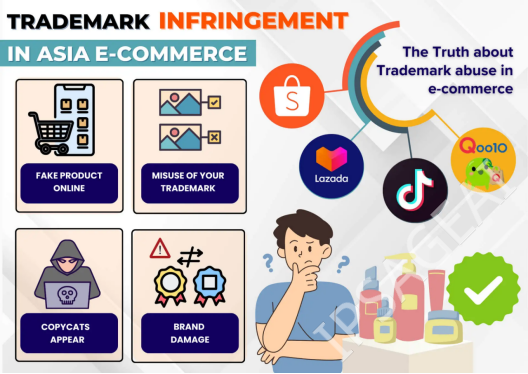
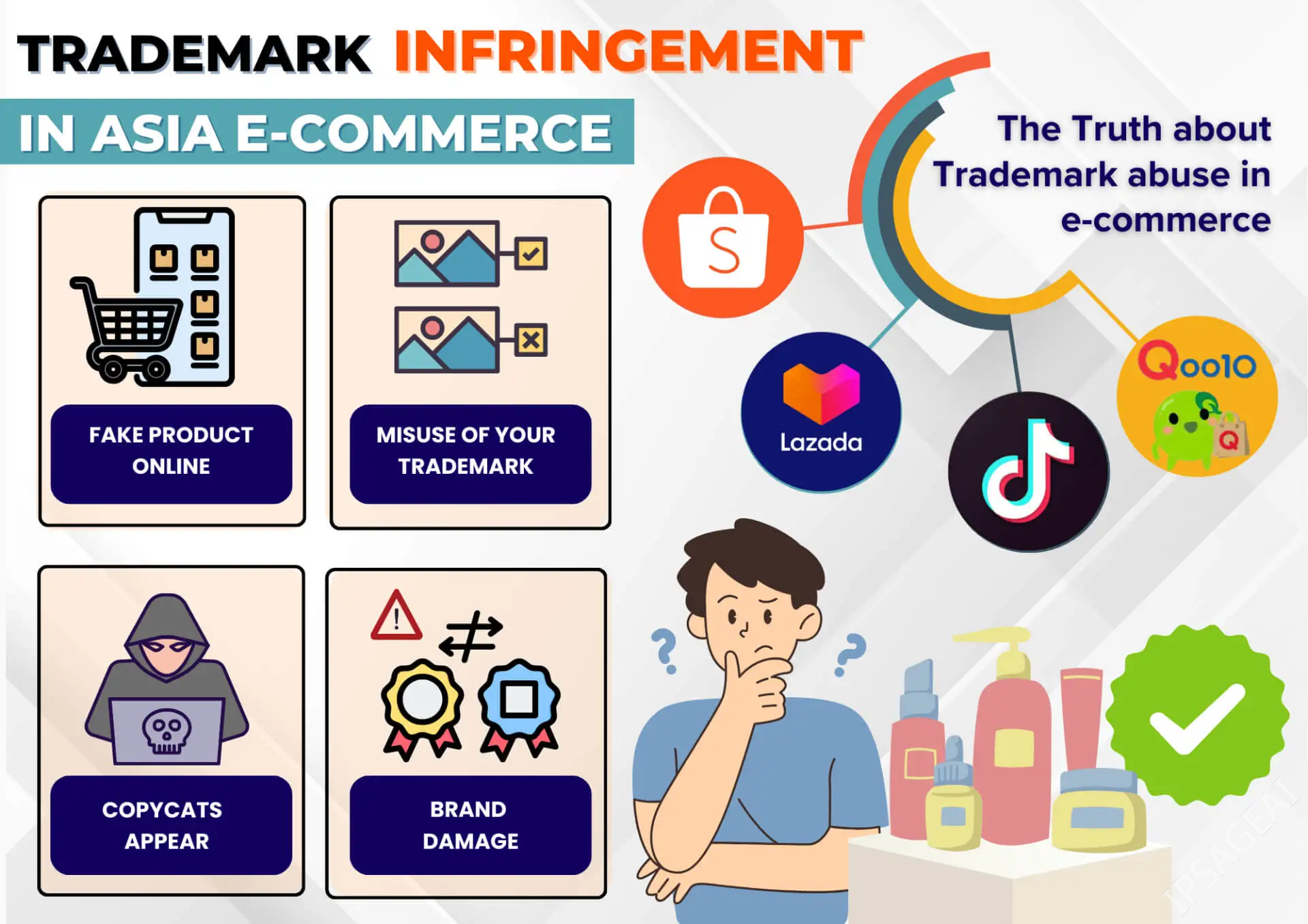
Trademark infringement in e-commerce spans fake products, logo misuse, copycat branding, and brand dilution. The infographic above illustrates the four primary attack vectors that law firms monitor.
Case Study 5: The Yiwu Seller Who Fought Back — Using TRO as a Weapon
Submitted by: Yiwu Branch, Overseas IP Dispute Response Guidance Center
A Yiwu-based company filed U.S. trademark and copyright registrations between 2019 and 2022. In September 2023, they discovered widespread infringement on overseas platforms and filed suit in the U.S. District Court for the Northern District of Illinois.
Results:
• Over 1,000 infringing defendants were named across multiple batches.
• 60% settled, paying $1,500–$10,000 per defendant.
• Non-responsive defendants received default judgments, yielding $400,000+ in total recoveries.
Lesson: TRO is not just a weapon used against Chinese sellers—it is a tool Chinese sellers can wield too. Overseas IP registration + active monitoring + rapid evidence collection = effective brand protection.
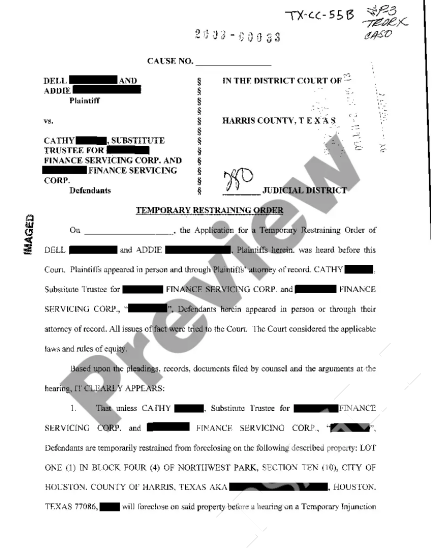
A real TRO document from a U.S. District Court. Every line carries legal force. Understanding its structure and implications is the foundation of effective TRO defense.
Summary: The 2026 TRO Survival Code
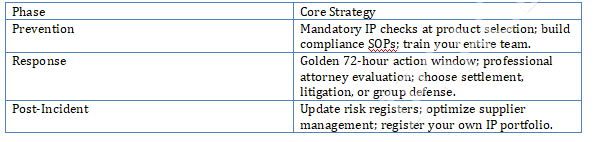
In 2026, TRO enforcement has entered the 'fast, precise, and ruthless' era. From evidence collection to fund freeze, the timeline has compressed to 1–2 months. Small sellers are now the primary target. Compliance is not a cost—it is the core competitive advantage of cross-border e-commerce.